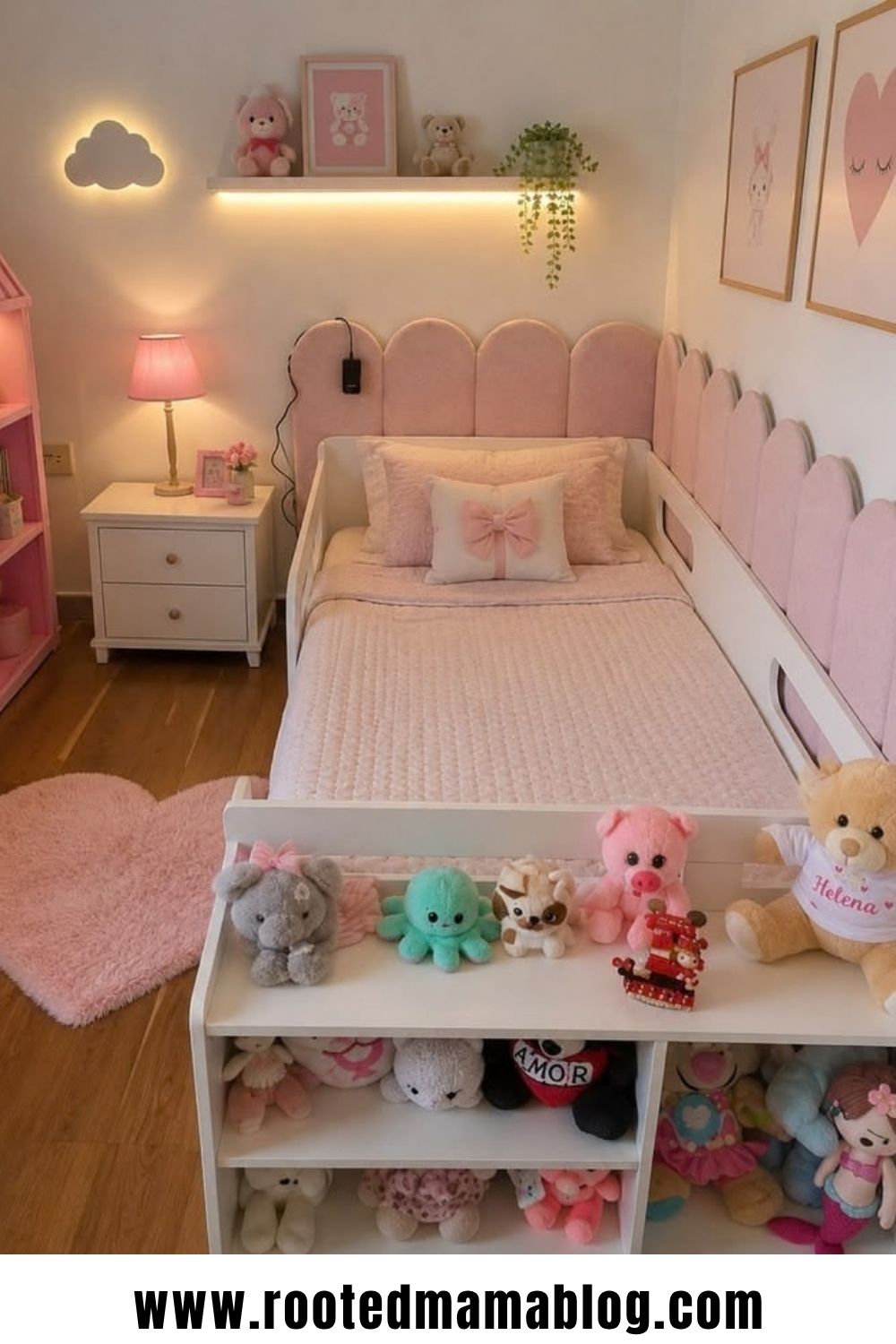
A small kids’ room can start feeling crowded surprisingly quickly. One minute, your child has a bed, a few books, and some favorite toys. Then suddenly, clothes are spilling from drawers, toys cover the floor, and there seems to be nowhere left to play.
If you are searching for how to make a kids’ room feel bigger, you probably do not want an expensive renovation. You simply want the room to feel lighter, calmer, and easier for your child to enjoy. The good news is that you can create that feeling without knocking down walls or changing the layout completely.
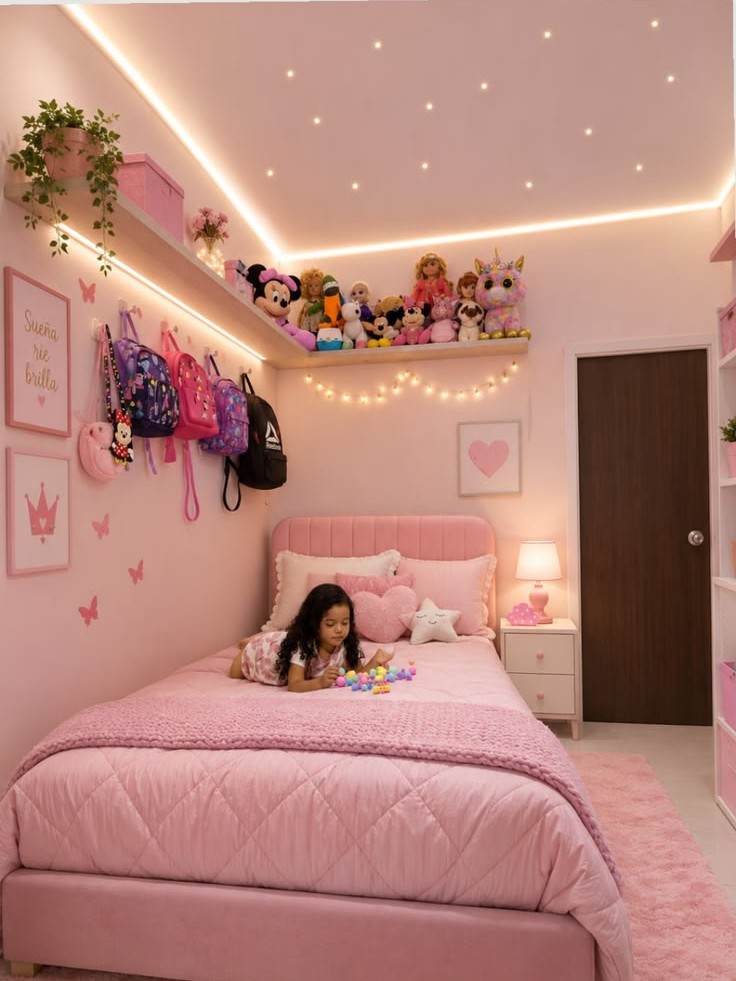
Sometimes, the biggest difference comes from making better use of the space you already have. A bed with storage underneath, floating shelves, wall-mounted organizers, and furniture that serves more than one purpose can free up valuable floor space.
Even the colors, curtains, mirrors, bedding, and placement of furniture can change how large a room feels. If toys and clothes are part of the problem, starting with 25 Kids Room Organization Ideas That Keep Toys and Clutter Under Control can also help you see which storage solutions might work for your child’s space.
Imagine walking into the room and seeing an open floor where your child can actually build, read, draw, or play. That is the goal. You do not need a designer bedroom or a huge budget to get there. Small changes can make a surprisingly big difference, especially when you combine clever storage with a simple layout.
If you are looking for more inspiration before moving things around, 27 Kids Room Design Ideas That Are Fun, Practical, and Stylish can give you plenty of ideas for creating a room that feels both beautiful and functional.
In this guide, we’ll look at practical ways to make a small kids’ room feel more spacious while keeping it comfortable, playful, and personal.
How to Make a Kids’ Room Feel Bigger Without Remodeling
1. Start by Removing Furniture Your Child Does Not Need
The first step in making a kids’ room feel bigger is often the simplest: remove anything that is taking up space without serving a real purpose.
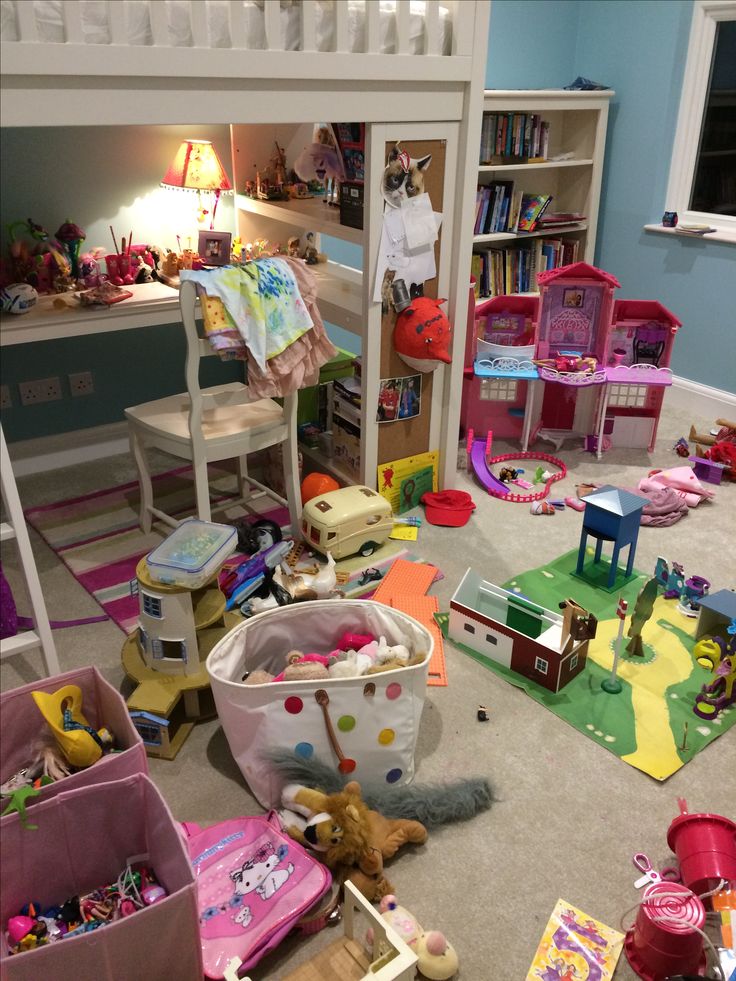
A small bedroom can quickly become crowded when it contains too many chairs, storage units, baskets, tables, and decorative pieces. Before buying anything new, walk around the room and decide what your child actually uses.
Look at the furniture from your child’s point of view. Does the large toy chest get used every day? Is that extra chair necessary? Could the bedside table be replaced with a smaller shelf? Removing even one bulky piece can create more visible floor space.
For more inspiration, take a look at Kids Room Ideas That Make Every Space Feel Magical and notice how different layouts use limited space without making the room feel empty.
2. Keep the Floor as Open as Possible
An open floor immediately makes a small bedroom look larger. This matters even more in a child’s room because children need space to move, play, build, and spread out their favorite toys. When the floor is constantly covered with storage bins and furniture, the entire room can feel smaller than it actually is.
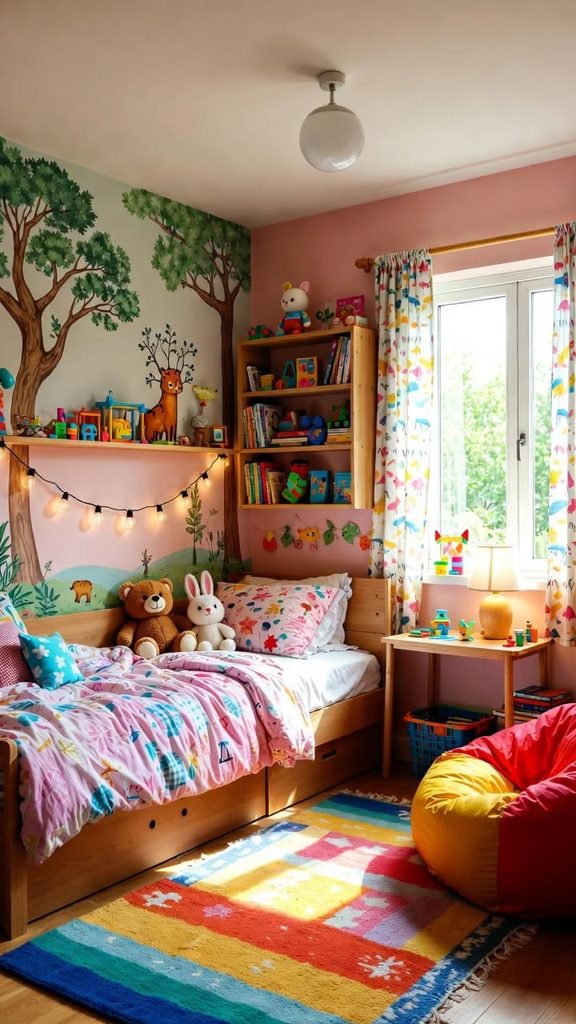
Try moving storage upward instead of outward. Wall shelves, hanging organizers, and hooks can hold books, toys, bags, and accessories without taking away valuable floor space. You can also choose furniture with raised legs because seeing more of the floor underneath creates a lighter appearance.
If your child enjoys playing indoors, you can make that open area even more useful by rotating toys rather than keeping everything available at once. 25 Indoor Activities for Kids That Beat Boredom can give you ideas for activities that work well when you want to keep playtime interesting without filling the bedroom with more toys.
3. Choose Furniture That Does More Than One Job
When space is limited, every piece of furniture should earn its place. A small bedroom benefits from furniture that performs two or three functions instead of taking up space for only one purpose.
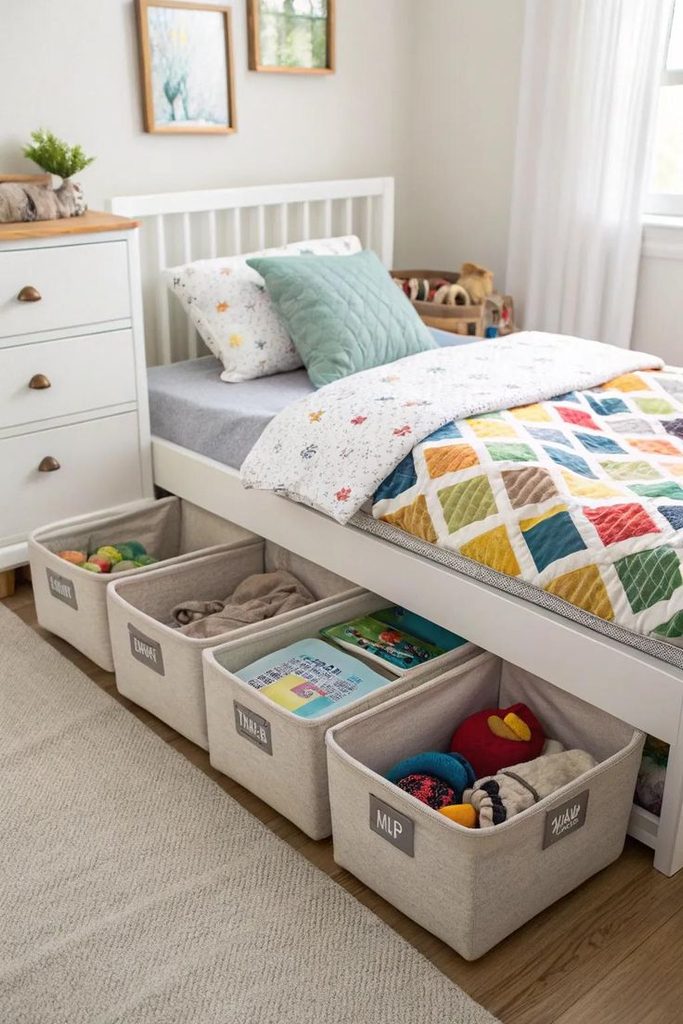
For example, a bed with drawers underneath can provide clothing or toy storage. A desk can double as a homework station and craft area. A storage bench can provide seating while hiding books, stuffed animals, or blankets inside. Even a small bookshelf can separate different areas of the room while providing useful storage.
The goal is not to squeeze more furniture into the bedroom. Instead, choose fewer pieces that work harder. This approach is especially helpful for siblings sharing a room.
If you are working with two children and limited space, 21 Shared Kids Room Ideas That Keep the Peace and Look Beautiful can offer additional inspiration for creating individual zones without overcrowding the room.
4. Take Storage Off the Floor
Floor storage can be convenient, but too many baskets and boxes can make a small bedroom look chaotic. When everything sits at floor level, the room can quickly feel visually heavy.
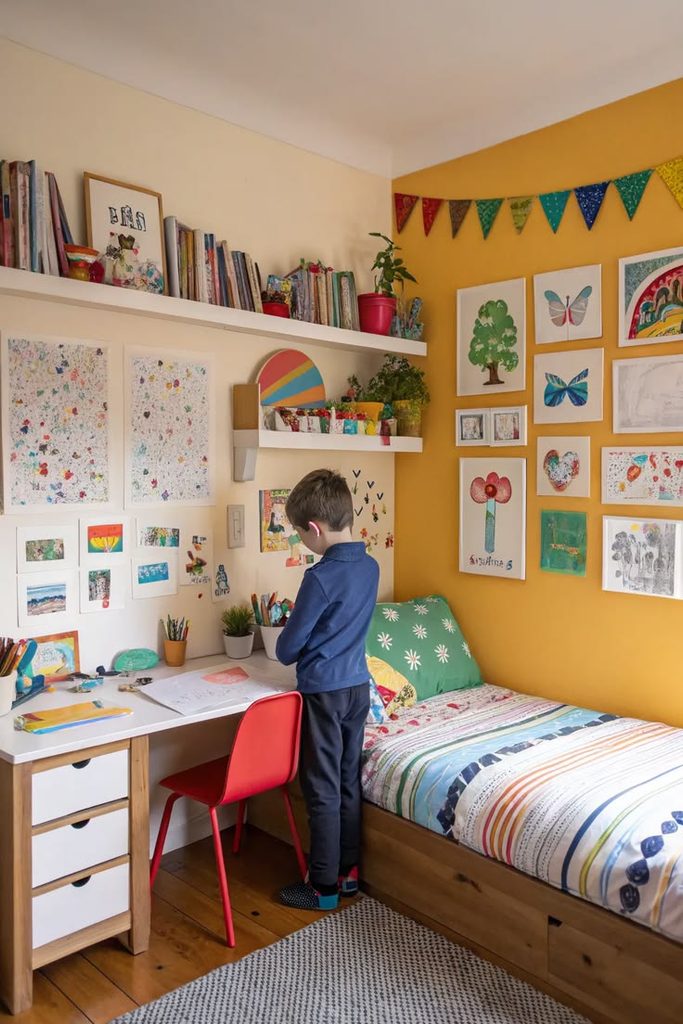
Use the walls whenever possible. Install floating shelves for books and small toys. Add hooks for backpacks, jackets, hats, and dress-up accessories. Consider a hanging organizer behind the bedroom door for smaller items that would otherwise end up scattered around the room.
You can also use the space above a desk or bed for carefully arranged storage. Keep everyday items within your child’s reach, while seasonal or less frequently used belongings can go higher. This creates a cleaner visual line and makes the room feel more spacious without changing its actual dimensions.
5. Use Light Colors to Create an Airier Feeling
Color can dramatically influence how a small room feels. You do not have to paint everything stark white, but lighter shades can make walls appear more open and help natural light travel around the room.
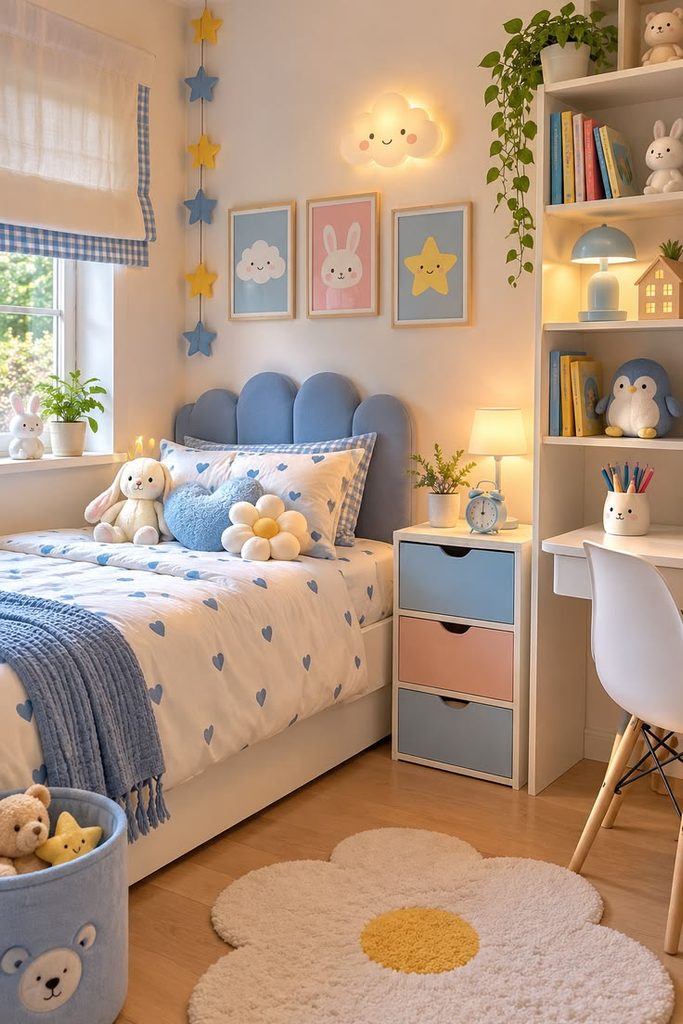
Soft white, warm cream, pale blue, gentle green, light beige, and muted pastels can all work beautifully in children’s bedrooms. If your child loves bright colors, bring them into the room through bedding, artwork, cushions, rugs, and toys rather than covering every wall with strong colors.
A simple color palette also reduces visual clutter. If you love colorful children’s spaces, you can still keep the room playful by choosing two or three complementary colors. 23 Colorful Kids Room Ideas That Spark Creativity and Joy can help you find ways to add personality without making a small bedroom feel visually overwhelming.
6. Let Natural Light Do the Work
Natural light is one of the easiest ways to make a small bedroom appear more spacious. Heavy curtains or furniture blocking the window can make the room feel darker and more enclosed.
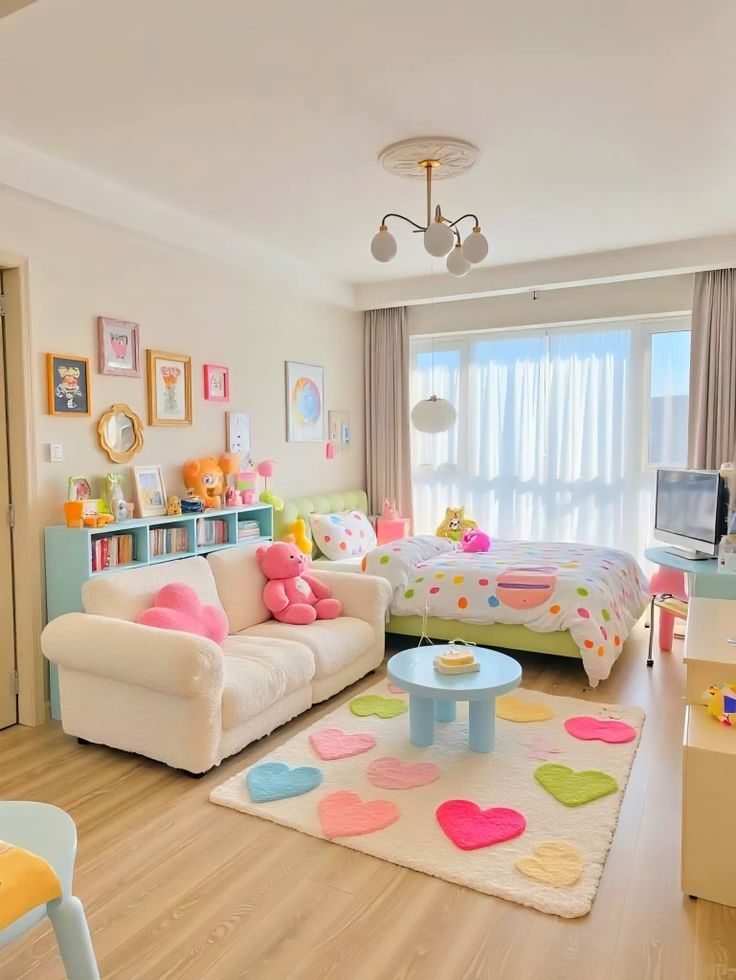
Choose lightweight curtains that allow plenty of daylight into the room. Keep the area directly around the window as clear as possible. If privacy is important, use a simple blind or light curtain that can be opened fully during the day.
You can also position the bed or desk so it does not block the main source of light. Even if the bedroom is small, allowing daylight to reach more of the room can make the entire space feel brighter and more comfortable.
7. Use Mirrors Carefully
A mirror can make a small bedroom feel more open because it reflects light and gives the impression of additional depth. You do not need a huge floor mirror to achieve this effect.
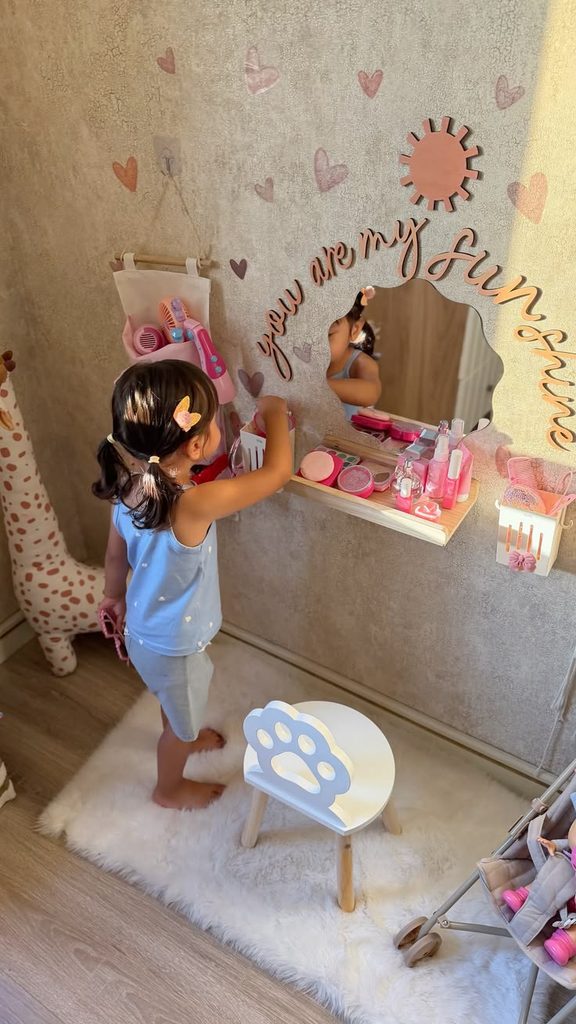
A medium-sized wall mirror can work well above a dresser or on an empty wall. For younger children, make sure the mirror is securely mounted and positioned safely. Avoid placing it where it could easily be knocked over during play.
You can also choose a decorative mirror that fits the room’s theme. This makes the mirror feel like part of the décor rather than something added only to create the illusion of space.
8. Create a Dedicated Play Area
A small bedroom does not necessarily need a separate playroom. You can create a small play zone without filling the entire room with toys.
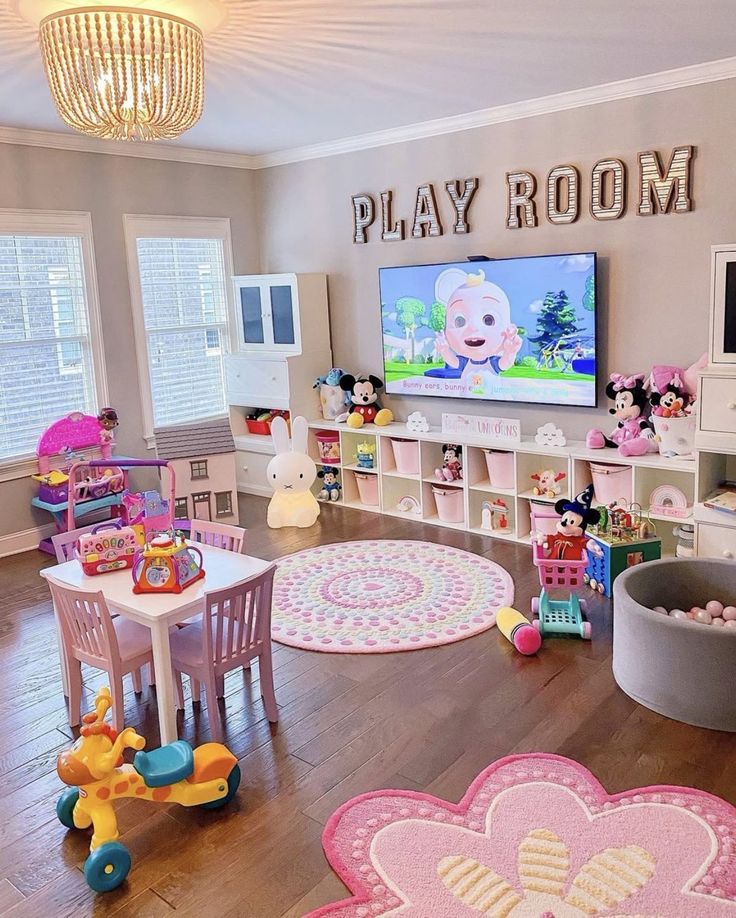
Choose one section of the bedroom for play and keep the rest of the room calmer. A small washable rug can visually define the area. A narrow bookshelf can hold a rotating selection of books and toys. Wall hooks can store costumes or activity bags when they are not being used.
This approach gives children a clear place to play while keeping the rest of the bedroom organized. If you are trying to combine sleeping and playing in a very small space, How to Create a Play Area in a Small Bedroom is another useful idea to explore.
9. Use Vertical Space Around the Bed
The area around a child’s bed is often overlooked. Instead of placing several pieces of furniture beside the bed, consider using the wall above or beside it.
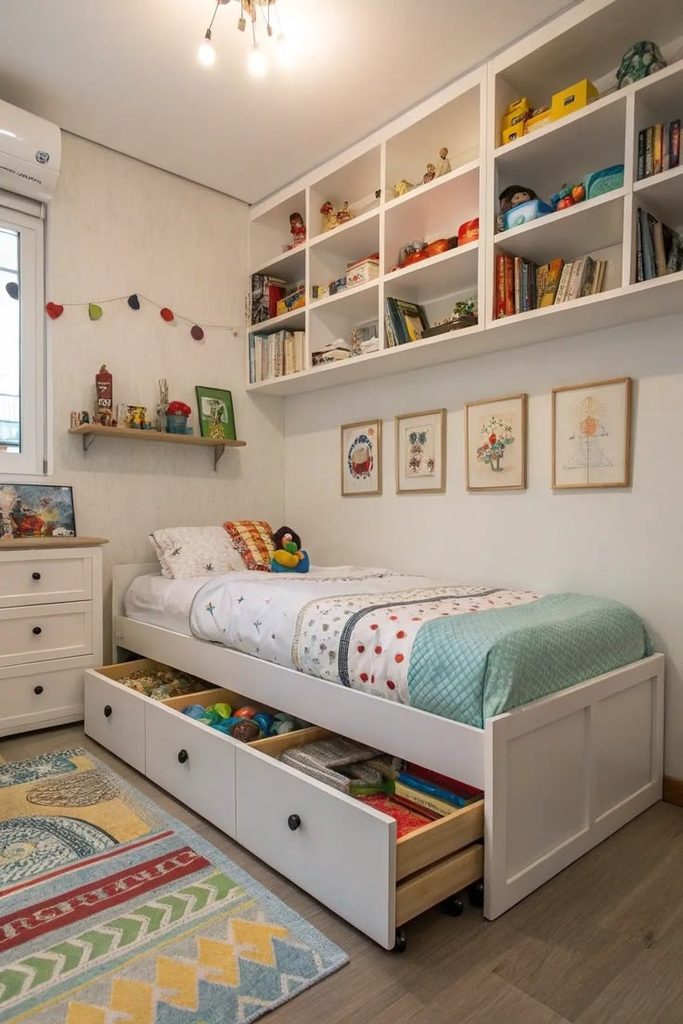
Floating shelves can hold a few favorite books. A narrow wall-mounted nightstand can replace a bulky bedside table. Small picture ledges can display artwork without requiring a large gallery wall.
However, avoid placing heavy or unsafe objects directly above a child’s sleeping area. Safety should always come before maximizing storage. Keep the arrangement simple, secure, and appropriate for your child’s age.
10. Make the Bed the Main Feature
In a small bedroom, too many competing focal points can make the room feel cluttered. Instead, let the bed become the main feature and keep the surrounding décor simple.
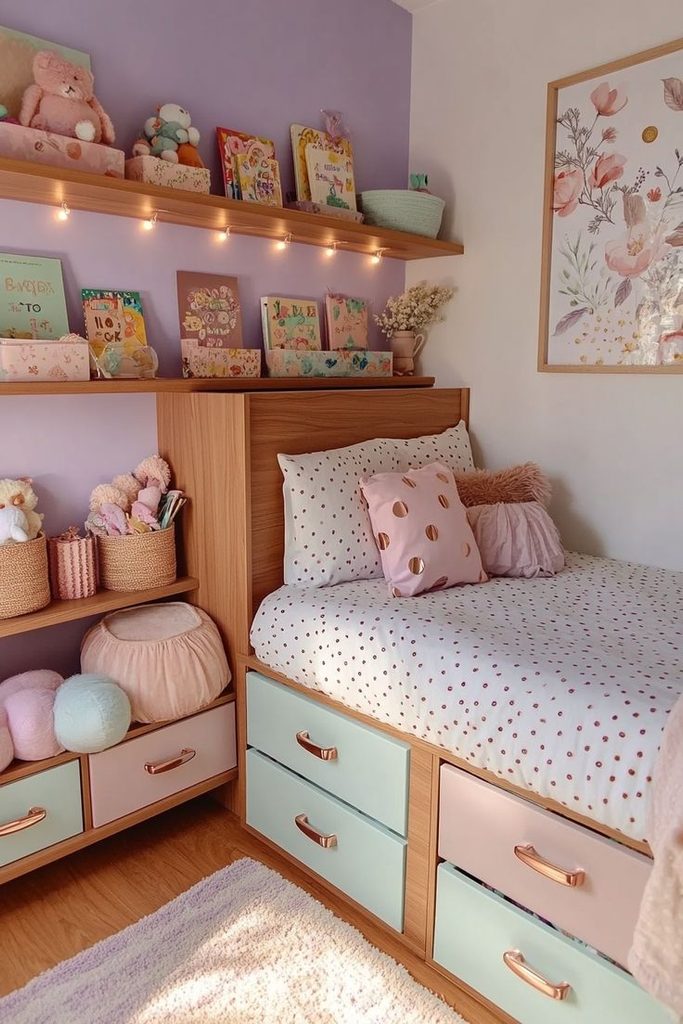
Choose attractive bedding that reflects your child’s personality. A favorite color, pattern, character, or theme can make the room feel special without requiring lots of decorations.
You can change the look of the room over time by switching pillow covers, blankets, artwork, or small accessories instead of replacing furniture. This keeps the bedroom fresh while preventing unnecessary purchases.
11. Declutter Toys Regularly
Even the most carefully designed small bedroom will eventually feel crowded if toys constantly accumulate. Children outgrow toys, lose interest in activities, and receive new things throughout the year.
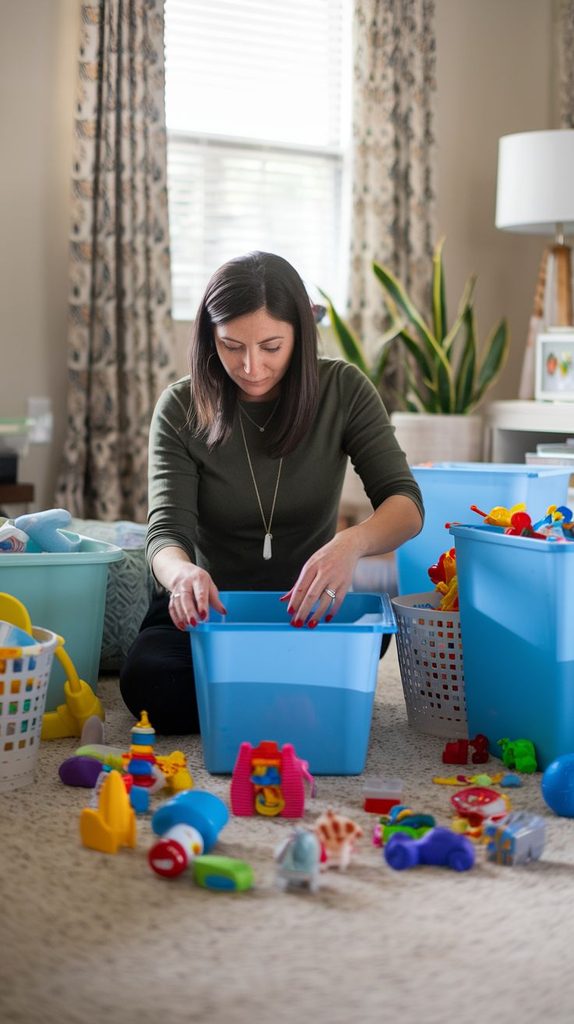
Create a simple routine for sorting toys. Keep favorites easily accessible, store occasional toys separately, and donate items your child has genuinely outgrown. You do not need to remove everything at once. Ten minutes of sorting every few weeks can prevent the room from becoming overwhelming.
If clutter seems to return no matter how often you tidy, Why Your Home Keeps Getting Cluttered and How to Fix It can help you think about the habits that are causing the problem rather than simply cleaning the same mess repeatedly.
12. Give Everything a Home
Children are much more likely to keep a room organized when they know where things belong. A bedroom with no clear storage system can become messy quickly because every item ends up wherever there is an empty spot.
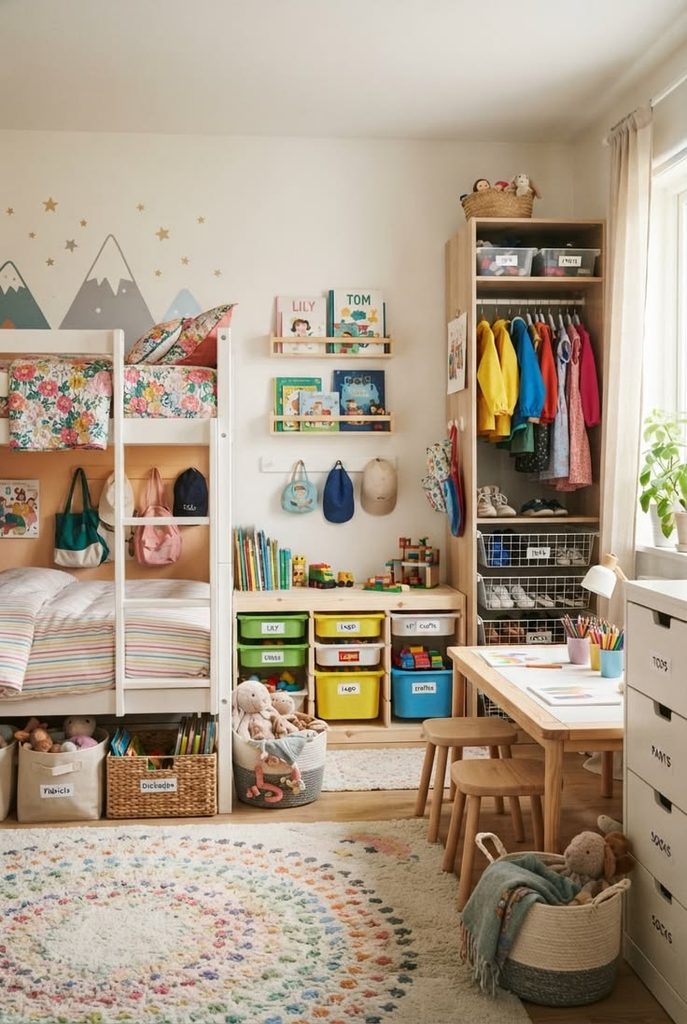
Use simple categories such as books, stuffed animals, art supplies, building toys, dolls, and clothing accessories. Label baskets if your child is old enough to read, or use pictures for younger children.
You can also make cleanup part of the daily routine. Five minutes before bedtime can be enough to return toys to their places. For families who want a broader organizational system, 35 Home Organization Ideas Busy Moms Will Wish They Tried Sooner has practical ideas that can extend beyond the bedroom.
13. Choose a Smaller Rug
A huge rug can visually divide a small bedroom and make the floor appear more crowded. Instead, consider a smaller rug that fits neatly beside or beneath part of the bed.
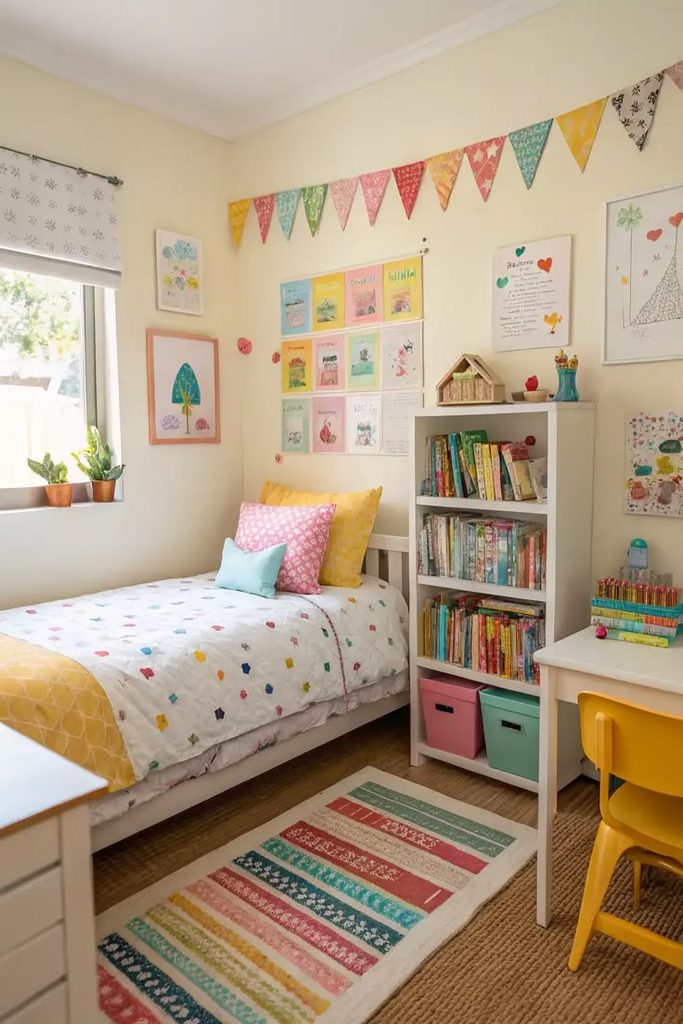
Choose a design that complements the room without adding too much visual noise. A simple pattern can add warmth while keeping the space feeling open.
If your child loves themed décor, you can introduce that personality through the rug without choosing an oversized design. The key is to leave enough visible floor around it so the room does not feel completely covered.
14. Keep Decorations Intentional
Decorating a child’s room can be exciting, but too many decorative objects can quickly make a small room feel busy. Instead of filling every wall and shelf, choose a few meaningful pieces.
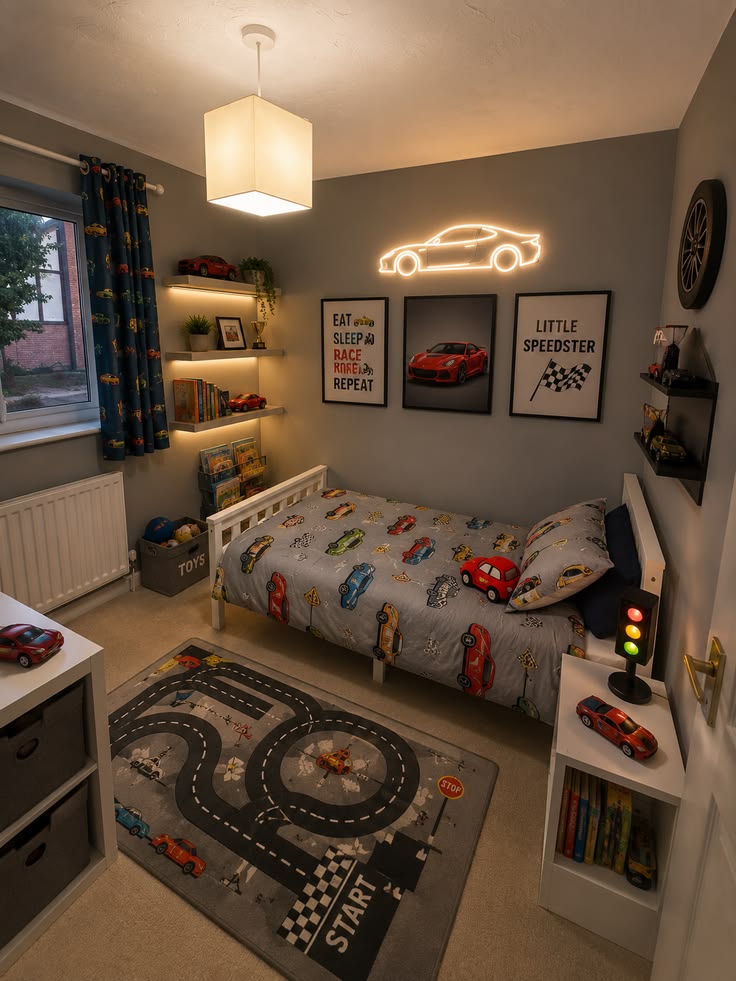
Your child’s artwork, favorite photographs, handmade crafts, or a special collection can become the decoration. Rotate these items throughout the year so the room continues to feel fresh without adding more permanent clutter.
This can also turn decorating into a family activity. For example, you could display a few creations from 21 Easy Crafts Kids Can Make at Home and change them seasonally. This gives the room personality while making the décor meaningful to your child.
15. Create a Simple Command Center for Daily Essentials
A small bedroom often becomes cluttered because everyday items have nowhere to go. Backpacks land on the floor, school papers pile up, and favorite jackets end up across the bed.
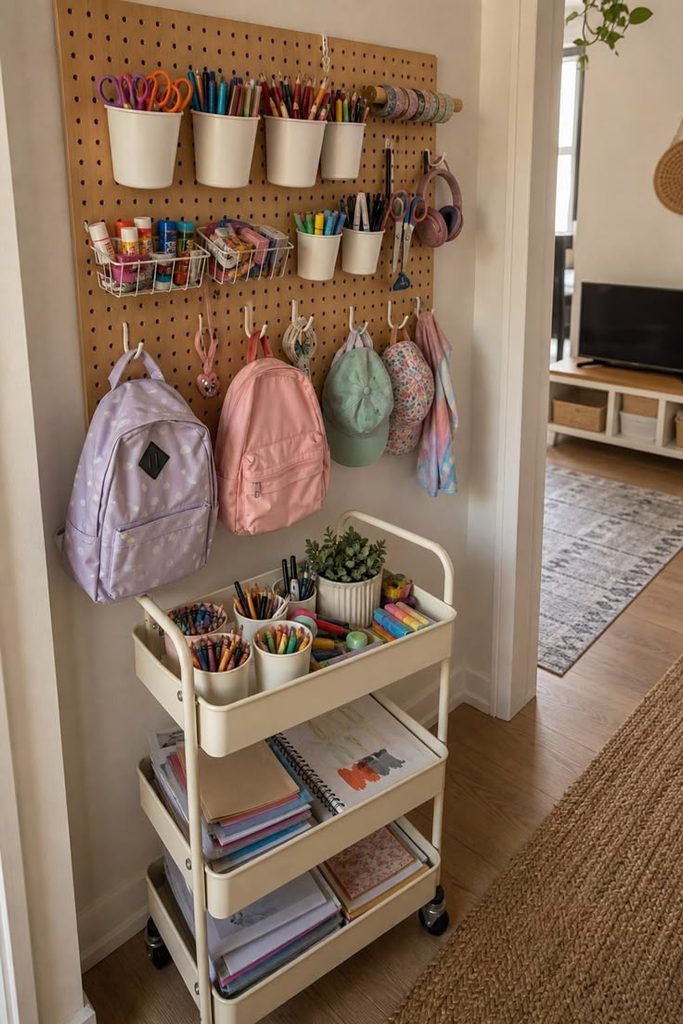
A small wall-mounted command area can solve some of these problems. Add hooks for bags, a small basket for papers, and a calendar or weekly schedule if your child uses one. Keep it compact so it does not become another source of clutter.
You could also create a small space for reminders, school notes, or artwork. For younger children, make the system simple enough that they can participate in putting things away.
16. Avoid Filling Every Empty Corner
One of the biggest mistakes people make when decorating small rooms is feeling that every empty space needs something in it. It does not.
Empty space is valuable. It allows the eye to rest and makes the furniture that is already there feel less crowded. A completely decorated room can actually look smaller because there is no visual breathing room.
Before adding another shelf, basket, chair, or decoration, ask yourself whether the room truly needs it. Sometimes leaving one corner completely open will make a bigger difference than buying another storage solution.
17. Make Changes That Grow With Your Child
A child’s interests change quickly. The room that works for a five-year-old may not work for a nine-year-old. Instead of creating a highly specific room that needs to be redesigned every few years, choose flexible pieces.
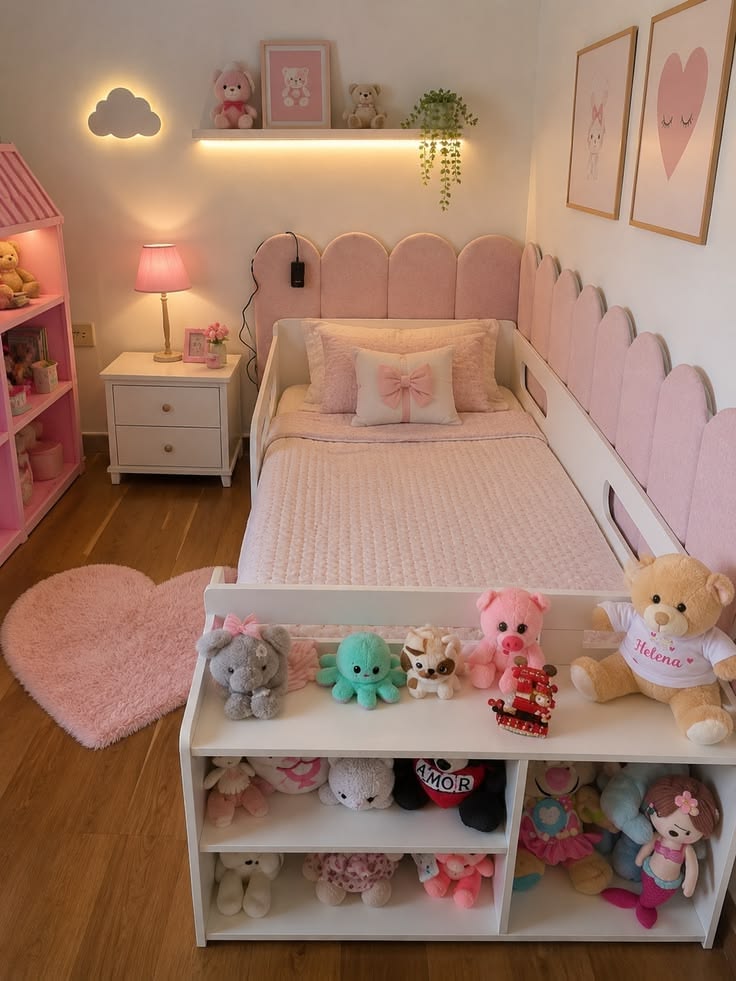
Neutral furniture can stay while bedding, artwork, curtains, and accessories change. Adjustable shelving can grow with your child’s books and belongings. A simple desk can eventually become a homework or creative workspace.
This approach also saves money. You are investing in the structure of the room rather than constantly replacing everything whenever your child discovers a new favorite theme.
18. Use the Door for Extra Storage
The bedroom door is another valuable area that is often ignored. An over-the-door organizer can hold shoes, hair accessories, small toys, craft supplies, or other lightweight belongings.
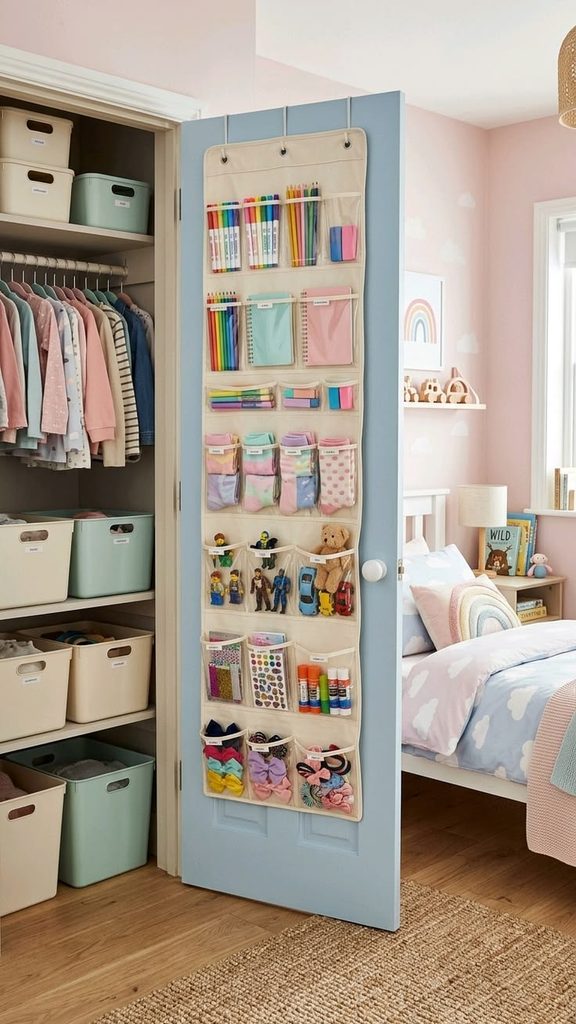
Hooks can also provide a home for dressing gowns, bags, or costumes. Just avoid making the door so heavy or crowded that it becomes difficult to open and close.
This small adjustment can free up drawers and floor space while keeping everyday items accessible. It is particularly useful when the bedroom has very limited built-in storage.
19. Rotate Instead of Displaying Everything
Children may love having lots of toys, books, artwork, and collections, but displaying everything at the same time can make their room feel smaller.
Try rotating items. Keep a selection of favorite toys and books accessible while storing the rest temporarily. After a few weeks, switch them around. The old toys may suddenly feel new again.
This approach gives your child variety without requiring additional storage. It can also make cleaning easier because there are fewer things to put away at the end of the day.
20. Make the Room Feel Bigger Through Better Habits
Ultimately, making a kids’ room feel bigger is not just about furniture or decoration. It is also about creating habits that protect the space you have.
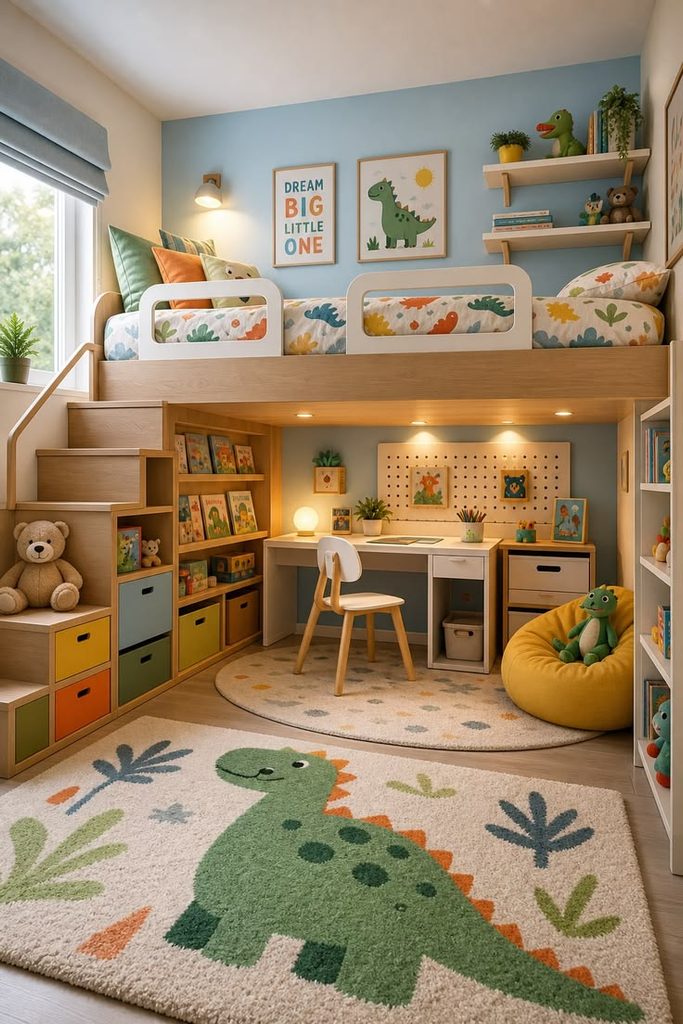
Encourage your child to put toys away before starting another activity. Teach them where clothes, books, school supplies, and toys belong. Make a quick evening reset part of the bedtime routine.
You can even turn cleanup into a small game. Set a timer and see how much everyone can put away before it rings. When organization becomes part of everyday life, the room stays spacious for longer instead of looking tidy only immediately after a major cleanup.
Final Thought
Learning how to make a kids’ room feel bigger does not mean making the bedroom boring, empty, or overly minimalist. Children need a room that feels like their own little world. They need somewhere to sleep, play, create, read, imagine, and keep the things they love. The challenge is finding a balance between giving them those things and avoiding a room that feels packed from wall to wall.
Start with the changes that will make the biggest difference. Remove furniture that is not necessary, open up the floor, use the walls for storage, choose lighter colors, and give toys a clear home.
You do not have to complete everything in one weekend. Even moving one piece of furniture or clearing one corner can make the room feel noticeably different.
Most importantly, remember that a bigger-feeling bedroom does not require a bigger budget. Smart storage, thoughtful furniture placement, fewer visual distractions, and simple organization can completely change the way a small room feels.
When your child can walk into the room and easily find their favorite book, build something on the floor, or curl up comfortably without feeling surrounded by clutter, you have created something more valuable than extra square footage. You have created a room that gives them space to simply be a kid.

